The premium is small enough that the real question is not whether you can afford it but whether you need it. This guide covers what it costs by size, how the premium compares across sources, and a way to decide for your own belongings.
What you are paying for
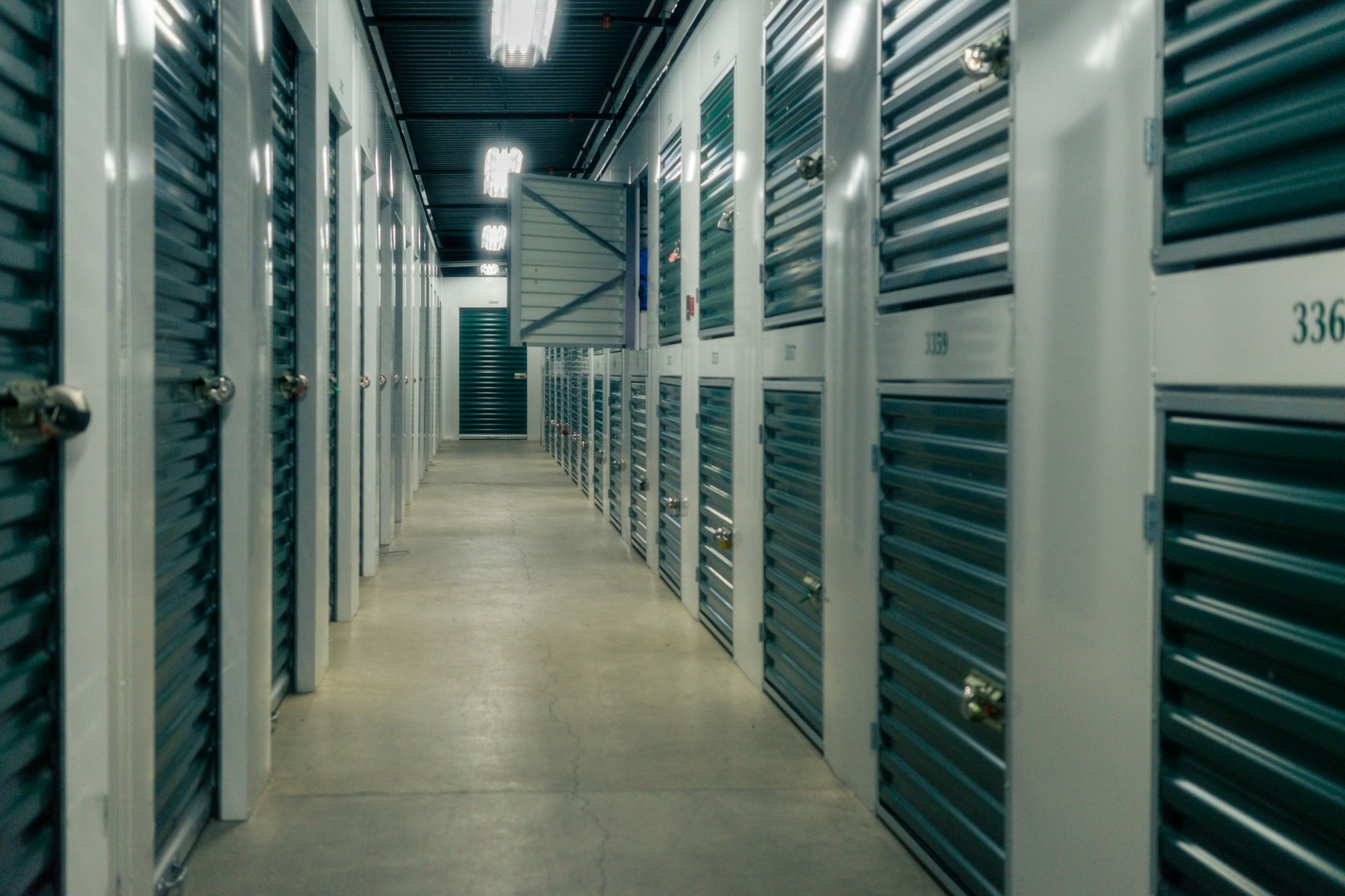
A climate-controlled unit sits inside a building that is heated and cooled, so the contents avoid the swings in temperature that a standard drive-up unit can get. The pages I used do not publish a temperature or humidity standard, and facilities set their own, so ask for the specific range in writing if you are storing something delicate. A unit marked climate-controlled in one building may not be held to the same range as one in the next.
Public Storage lists indoor versus drive-up access, floor level and building layout among the things that change the rent, so a climate-controlled unit on an upper floor can price differently from one by the door.
National street rates, October 2026 (StorageCafe)
| Unit type | Standard (no climate control) | Climate-controlled | Extra per month |
|---|---|---|---|
| 10x10 | about $119 | $133 | about $14 |
| All sizes | $152 | $168 | $16 |
Climate-controlled price bands (Yelp)
| Size class | Unit sizes | Monthly cost |
|---|---|---|
| Small | 5x5 to 5x10 | $75–$100 |
| Medium | 5x15 to 10x15 | $125–$175 |
| Large | 10x20 to 10x30 | $225–$300 |
How big the premium really is
On the 10x10 the premium is smaller than most people assume. StorageCafe has $133 against about $119, a $14 gap. Public Storage has $125 against $117, a gap of $8. Yelp's general range is 10% to 20%.
Because the three sources measure different things (street rates for new customers in StorageCafe, one operator's average rents in Public Storage, a consumer site's general bands in Yelp), the honest answer is a range: about $8 to $14 a month for a 10x10, or 7% to 12%.
Larger units tell a different story. At Public Storage the extra rent is $32 a month on a 10x20 and $53 on a 10x30, which is 16% and 18% more. Over a year, that is $384 and $636. When you are choosing between a 10x20 you will pack tight and a climate-controlled unit one size down, run the math for the whole time you will rent, not one month.
When it is worth paying for
Climate control earns its fee when your belongings can be damaged by heat, cold or moisture and when you will keep them for months. Wood furniture, upholstered pieces, mattresses, leather, electronics, musical instruments, photographs, documents and art are the usual candidates. I could not find a published study that quantifies the risk, so this is judgment, not data.
There is also a range where it is not worth it: plastic tubs of kitchen gear, tools, outdoor equipment, and a spare bed frame in a mild climate for a couple of months. With a premium of $8 to $14 on a 10x10, the cost of skipping it is low for sturdy items and high if the unit is full of things you cannot replace.
Time matters too. A one or two-month stay between leases leaves little time for damage. A year or more, especially through a hot summer or a hard winter, is where the premium looks like cheap insurance.
Local prices vary more than the premium
The gap between standard and climate-controlled is small compared with the gap between cities. Public Storage lists its climate-controlled averages at $114 to $292 a month across sizes, and the city-level spread is wide: in Los Angeles its climate-controlled units run from $49 to $844 a month, in Chicago from $14 to $527 and in Atlanta from $12 to $577 (those are minimum and maximum across units and sizes).
So a climate-controlled unit in a cheap market can cost less than a standard unit in an expensive one. If you are flexible on location, a facility 15 minutes farther out can save more than skipping climate control. StorageCafe's national spread for a 10x10 runs from about $73 in Oklahoma City to about $302 in San Francisco, a difference of about $229 a month, far larger than the premium.
Fees and what else to ask
The price of the unit is not the whole bill. Public Storage's sample first month is $1 plus a $29 administrative fee and a $21.99 lock, for $50.99, and says insurance is not included. Yelp also mentions administrative fees of $20 to $30.
Before you rent, ask four things: the monthly rate for the exact unit and what it becomes after any promotion, the temperature and humidity range the facility maintains, what insurance is required and its cost, and how often the rate has gone up for existing tenants. Get the answers in writing.
Cheaper ways to protect your stuff
If you decide the premium is not worth it for everything, split the load. Keep furniture, electronics and documents in a smaller climate-controlled unit and put tools and plastic tubs somewhere else, such as a garage or a relative's basement. A smaller unit saves more than the premium costs: Public Storage's 10x10 climate-controlled average is $125 and its 10x15 is $171.
If you are moving across the country and need storage at both ends, a portable container that stays at the provider's warehouse is another option. Our moving container cost guide covers it, and the storage unit cost guide has prices for every size.
A real-world example
Sample cost: climate-controlled 10x10 for 12 months
- Standard 10x10, 12 months at about $119 (StorageCafe)
- $1,428
- Climate-control premium, 12 months at about $14 (StorageCafe gap)
- $168
- Administrative fee (Public Storage sample)
- $29
- Lock (rounded from $21.99)
- $22
- Total
- $1,647
An illustration at national street rates, not a quote. Insurance, rent increases and promotions are not included, and your local price may differ widely.
How to pay less
- Ask whether a smaller climate-controlled unit for delicate items plus a cheaper standard space for sturdy ones costs less than one large climate-controlled unit.
- Pay for climate control only where it counts: wood, electronics, leather, documents, instruments and mattresses.
- Compare facilities a short drive apart. The city spread (about $73 to $302 for a 10x10 in StorageCafe's data) dwarfs the $8 to $14 premium.
- Get the temperature range in writing, and ask whether the unit is indoors.
- Check whether your renters policy covers stored goods before buying the facility's insurance.
- Set a cancel date. Rent runs until you give notice, and a unit you forgot about at $133 a month costs about $1,596 a year.
Questions people ask
How much more is climate-controlled storage?
About $8 to $14 more per month for a 10x10: $125 against $117 at Public Storage and $133 against about $119 in StorageCafe's data. Yelp puts the premium at about 10% to 20% in general.
How much is a climate-controlled 10x10 storage unit?
$125 to $133 a month on national averages (Public Storage and StorageCafe, 2026). Yelp's band for medium units is $125 to $175.
Is climate-controlled storage worth it?
For wood, electronics, leather, documents, instruments and long stays, usually yes, since the premium on a 10x10 is under $15 a month. For plastic tubs and tools for a short stay, you can skip it.
What is the cost of climate-controlled storage by size?
Public Storage averages $51 for a 5x5, $79 for a 5x10, $171 for a 10x15, $235 for a 10x20 and $348 for a 10x30.
Does climate-controlled storage cost the same everywhere?
No. City matters far more than the premium. StorageCafe puts a 10x10 at about $73 in Oklahoma City and $302 in San Francisco.
Is climate-controlled storage the same as heated?
Not necessarily. Ask the facility for the temperature range it holds and whether the unit is indoors, and get the answer in writing.
Sources
- Storage Unit Prices Across the US, StorageCafe, checked November 23, 2026national street rates for standard and climate-controlled units, city extremes (October 2026)
- The Complete Guide to Storage Unit Prices in 2026, Public Storage, checked November 23, 2026standard vs climate-controlled averages by size, climate range by city, first-month fees
- How much does climate controlled storage cost?, Yelp, checked November 23, 2026price bands by size class, premium percentage, administrative fee range